If you are asking why your book is not selling, you have probably already tried ads, price drops, and asking friends to post on Instagram.
Sometimes the story is fine. The product is the problem—cover, interior, trim size, or the wrong file format on Kindle. Readers decide in seconds, and they are not polite about it.
We are a design studio, so we see the ugly truth in Look Inside previews and thumbnail grids every week. Here is how to tell if book design is holding you back, and what to fix first when your budget is tight.
The Cover Thumbnail Test (Where Most Sales Die)
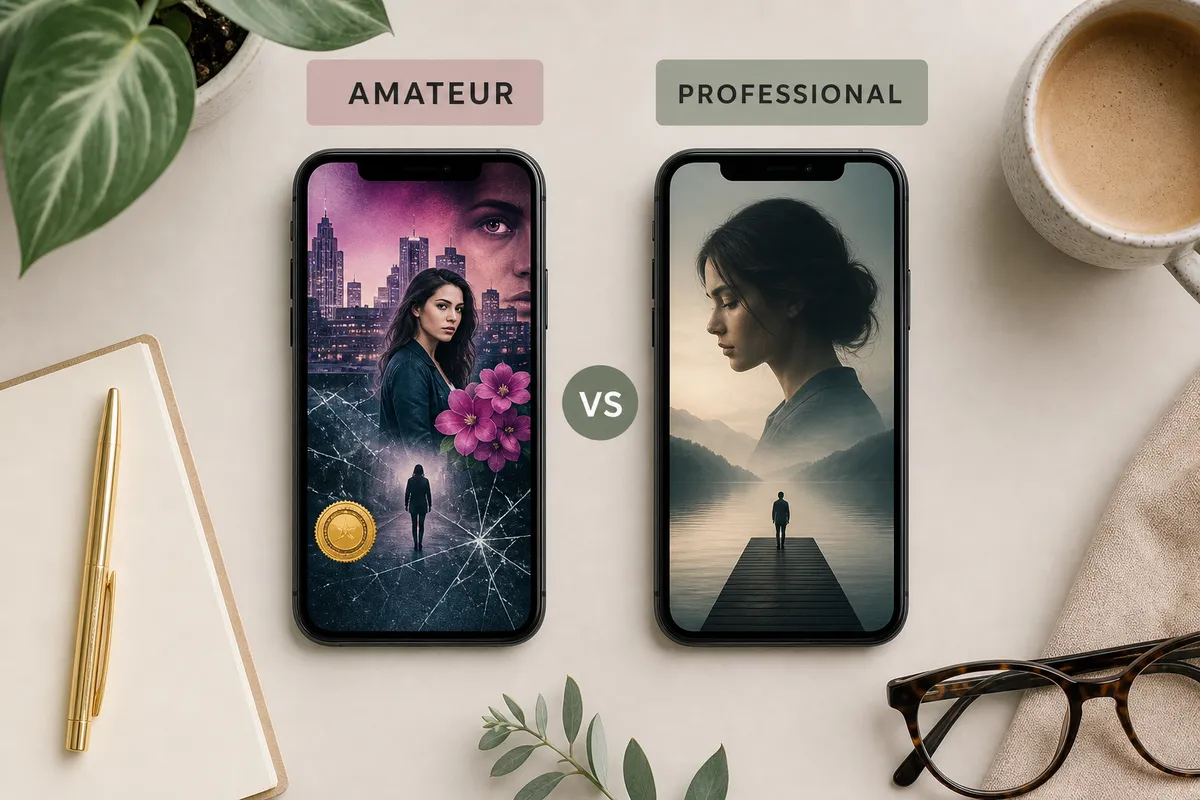
Eighty percent of your cover's job happens at thumbnail size on a phone. If title text is unreadable, if genre is ambiguous, or if the image looks like a Canva template from 2019, readers scroll past.
Open Amazon on your phone. Search your subgenre. Your cover should sit comfortably among the top 20 bestsellers. Not identical—genre-appropriate. If yours looks like clipart next to photographic thrillers, you lose the click.
Common killers:
- Too many fonts (more than two families)
- Centered title lost in busy background art
- Wrong trim proportions on the mockup
- Spine text on a paperback with under 100 pages (looks amateur in hand)
Our book cover design cost guide breaks down what professional covers include and what DIY shortcuts cost in lost sales.
Look Inside: When the Interior Betrayed the Cover
Amazon's Look Inside feature is a free proofreader for buyers. They see:
- Cramped margins and bad hyphenation
- Orphan lines and widow lines on every spread
- Chapter headings that look like Word defaults
- Front matter missing a proper copyright page
Readers associate sloppy interiors with sloppy research in non-fiction and sloppy storytelling in fiction. Fixing the interior often costs less than another month of ads.
Start with our print-ready PDF checklist and KDP formatting guide. If the Look Inside still embarrasses you, hire formatting before you spend another dollar on ads.
Trim Size and Genre Mismatch
A 6×9 thriller among 5.5×8.5 literary novels feels "self-published" in the wrong way. A thin 5×8 book with 90,000 words feels like a pamphlet. Trim size is a subconscious genre signal.
Measure bestsellers in your exact subcategory. Our trim size guide maps genre to dimensions for USA and UK markets.
Geo note: UK readers often expect slightly smaller trade sizes. USA non-fiction skews larger. Match the market you advertise to.
When Reviews Quietly Mention Design
Search your reviews for: "formatting," "hard to read," "font," "typo," "editing" (when you hired an editor), "cheap," "amateur." These are design and layout complaints wearing editing masks.
One-star reviews citing unreadable text on Kindle often trace to PDF uploaded as ebook—a format problem, not a writing problem. See EPUB vs PDF for KDP.
What to Fix First on a Limited Budget
Priority 1: Cover that passes thumbnail test in your subgenre. Priority 2: Look Inside interior (margins, fonts, front matter). Priority 3: Description and keywords (write a description that sells). Priority 4: Ads and wide distribution (IngramSpark for bookstores).
Spending on ads before Priority 1–2 is paying to show a broken product to more people.
The Takeaway
Marketing amplifies what is already working. It cannot fix a cover that fails the thumbnail test or an interior that embarrasses you in Look Inside.
Fix the package first—cover, trim, interior, correct ebook file—then spend on ads and wide distribution like IngramSpark bookstores.
Want a second pair of eyes? We do quick audits for authors before they burn another month of budget. Services · Contact.
Frequently Asked Questions
Related reading

Self-Publishing
How to Write an Amazon Book Description That Sells (2026)
7 min read
Self-Publishing
The Self-Publishing Timeline: When to Start Book Design and Formatting
8 min read
Self-Publishing
How Long Does Book Formatting Take? Timeline and What Affects It
6 min read
Explore our professional cover design, read Amazon description guide, see portfolio, or view transparent pricing.